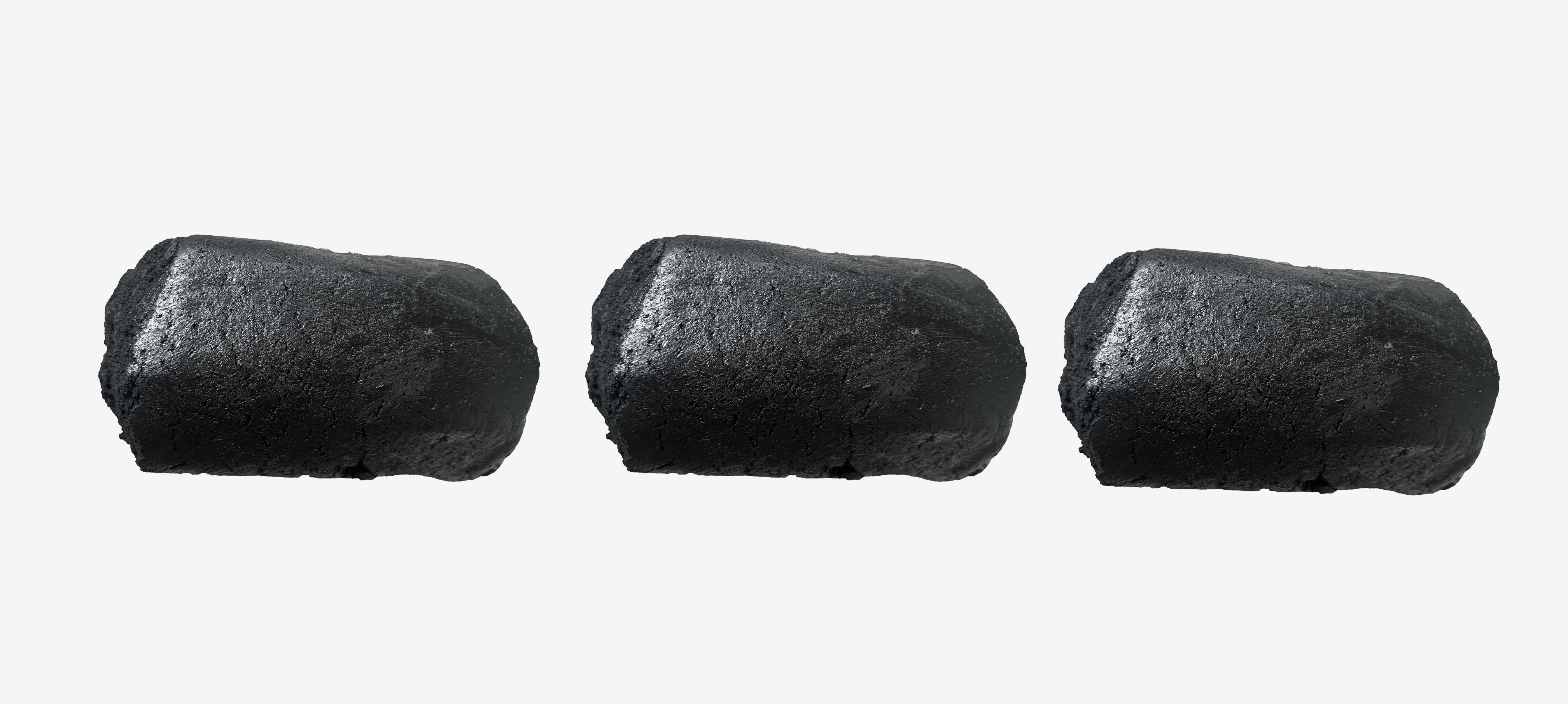
After iron tapping is complete, an anhydrous gunning tool must be used to inject taphole plugging clay into the tap hole. The newly injected high performance taphole clay will bond with the old gunning clay remaining in the tap hole.
In the high-temperature environment of the blast furnace, as soon as the leading edge of the injected high temperature taphole clay comes into contact with the incandescent molten iron and slag inside the furnace, its surface rapidly sintered, forming a “hard shell.” As more waterless cannon mud is injected, the subsequent layers push this “hard shell” forward and outward in all directions. Consequently, the anhydrous rammed clay takes on a “mushroom-head” shape inside the blast furnace. The gunning clay also heats up rapidly, undergoing internal changes as it sintered and hardened, thereby forming a stable clay plug to prevent iron seepage and furnace gas leakage. The inner wall of the gunning clay at the taphole is eroded by molten iron and slag. The blast furnace gunning clay is subjected to high temperatures, chemical corrosion from molten iron and slag, and erosion. The “mushroom-shaped” structure formed by the gunning clay also serves to protect the furnace wall.
During tapping, a drill bit is used to break through the hard, sintered crust of the anhydrous gunning clay, and furnace pressure is then used to push aside the remaining thin layer of anhydrous gunning clay, allowing the molten iron to flow out. This ensures the safe and continuous operation of the blast furnace.
Therefore, high-quality anhydrous taphole clay must possess high-temperature resistance, sinterability, corrosion resistance, erosion resistance, and drillability.